🎡 Spin the Wheel for New Year Games – Rules, Scoring & Variations
By The Wheel of Name Team ·
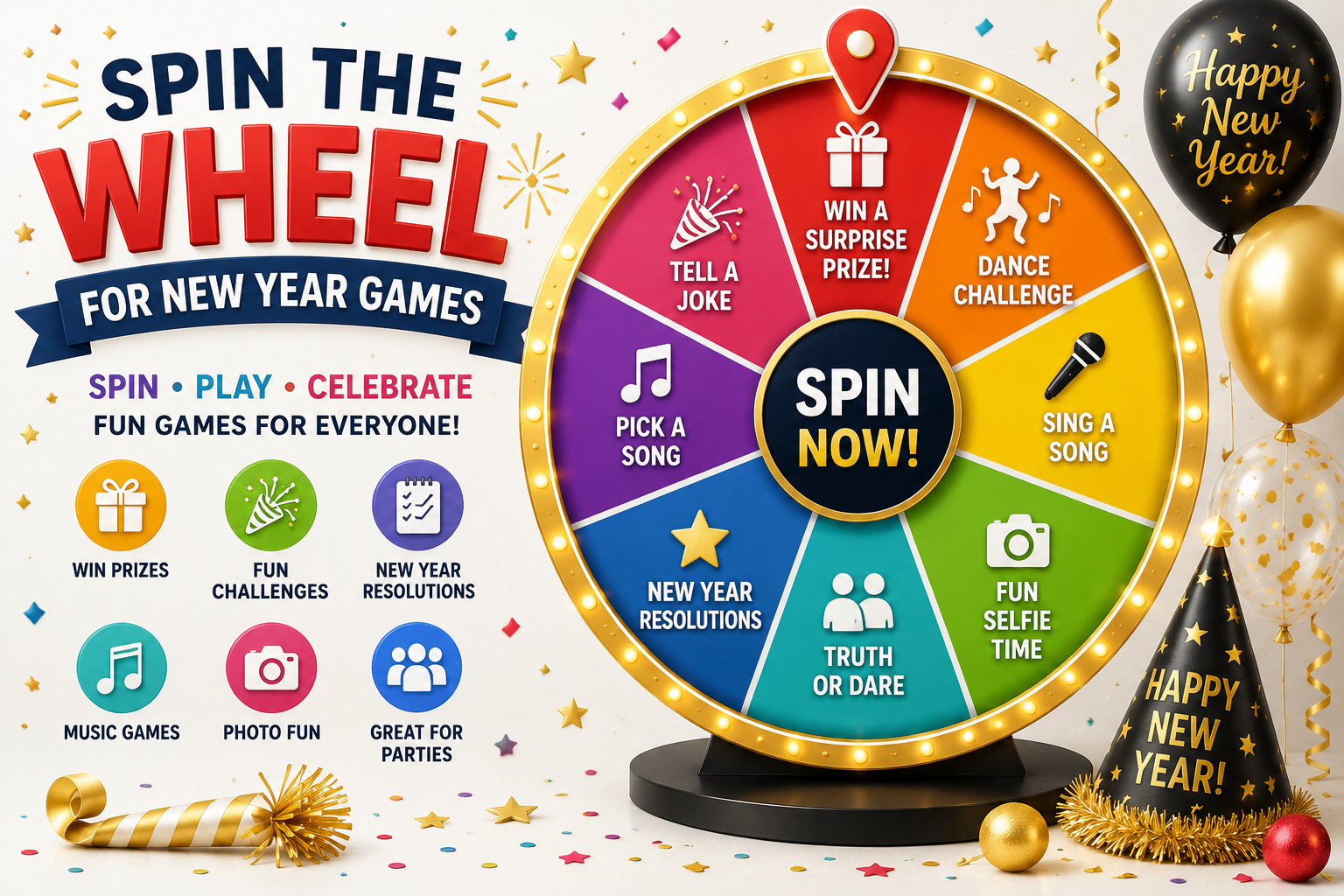
A spin-the-wheel game is more fun when it has actual structure — clear turn order, defined consequences for each spin, and a format that scales to your group size. Here's how to set up wheel games with real rules rather than just spinning and hoping something interesting happens.
🔄 1. Basic Turn Structure: How the Game Actually Works
Before the first spin, decide on three things: who goes first, how many spins each player gets per round, and what happens after completing a segment's action. A reliable starting format:
- Who goes first: Youngest player, or the person whose birthday is closest to January 1st. For larger groups, do a single elimination spin-off — first to complete their challenge stays in, others sit out the first round.
- Turns per round: One spin each in a clockwise direction. For competitive games, each completed challenge earns a point. For cooperative games, everyone cheers the spinner through their challenge before the next player goes.
- After a challenge: The group votes thumbs up or down on whether the spinner completed it properly. Majority rules. This keeps it social and prevents disputes from dragging on.
🏆 2. Competitive Mode: Adding Points and Scoring
A points system transforms a casual spinning session into an actual game with a winner. One simple scoring setup:
- Standard challenge: 1 point for completing it.
- Hard challenge (longer or more difficult segments): 2 points. Mark these segments differently on the wheel before you start.
- Wild card / "spin again": No points, but the player gets another immediate spin — which can be valuable in a tight game.
- Prize segment: 1 point plus the physical prize (keeps prize wheel competitive without pure luck winning the game).
Play to a target score (first to 10 points) or run three full rounds and total up. Crown the winner at midnight or just before the countdown for maximum drama.
👥 3. Team Wheel Games for Larger Groups
For groups of eight or more, individual turns get slow. Team formats keep everyone involved:
- Team challenge relay: Split into two teams of equal size. Teams alternate sending one player to spin. The team with more completed challenges after three rounds wins.
- Team trivia wheel: Segments are trivia categories (New Year history, music from the past year, celebrity events, local knowledge). The spinning team huddles for 30 seconds and answers. Points go to the team, not the individual.
- Collective dare wheel: The spinning team picks a member to complete the dare — good teams use this strategically, choosing whoever is best at the specific challenge.
🔁 4. Variation: The Reverse Wheel
In the standard game, the spinner does whatever they land on. In the reverse version, landing on a dare or challenge means the spinner assigns it to another player of their choice. This changes the dynamic significantly:
- Players pay much more attention when any spin might mean they get assigned a dare.
- Social dynamics emerge — people assign challenges to friends who they know will be funny completing them.
- Works best with dare and challenge segments only. Keep prize segments as normal (the spinner wins the prize).
- Good rule: the spinner cannot assign to the same person twice in a row.
📐 5. Formats for Different Group Sizes
Group size changes how the game should be structured:
- 2–4 players: More spins per round (three each), longer challenges, and a scoring system. Small groups have more time per player, so use that for more involved activities like 60-second trivia or multi-step dares.
- 5–10 players: Standard one-spin-per-round format. This is the sweet spot — enough players that any result gets an audience, small enough that everyone spins frequently.
- 10+ players: Team format is almost always better. Individual turns at large parties take too long, and players disengage. Teams of three to four maintain energy and involvement.
🎉 Explore More New Year Ideas
❓ Frequently Asked Questions
Can I play New Year wheel games online?
Yes, the New Year Wheel works on mobile, tablet, and desktop. For online group play, share your screen in a video call and let each player call out "stop" to land their spin.
What happens if two players tie on points?
Sudden death: each tied player spins once and completes the challenge. The group votes on who did it better. If still tied, whoever completes a second challenge faster wins.
Is the scoring system required?
No. Cooperative play without scoring works well for families or groups where competition would create tension. The rules above are for when you want an actual winner.
Can I use the wheel for office parties?
Yes. Team trivia and collective challenge formats work best in professional settings — they keep things collaborative rather than singling out individuals for dares.
🔧 Quick Setup
Open the New Year Wheel tool, label each segment with its challenge type and point value, and run through the rules verbally before the first spin. For competitive games, keep a visible scoreboard — a whiteboard, sticky notes on a wall, or a shared phone note all work.
Share this wheel:
I just used this fun wheel on thewheelofname.com 🎡 Try it!.