💪 New Year Fitness Resolutions You Can Actually Follow (2026)
By The Wheel of Name Team ·
By New Year Resolution Team • Updated May 2026
Every year, people set ambitious fitness goals — and most fail within weeks. The problem isn’t motivation, it’s unrealistic planning. This guide focuses on **simple, practical, and achievable fitness resolutions** you can actually follow in 2026.
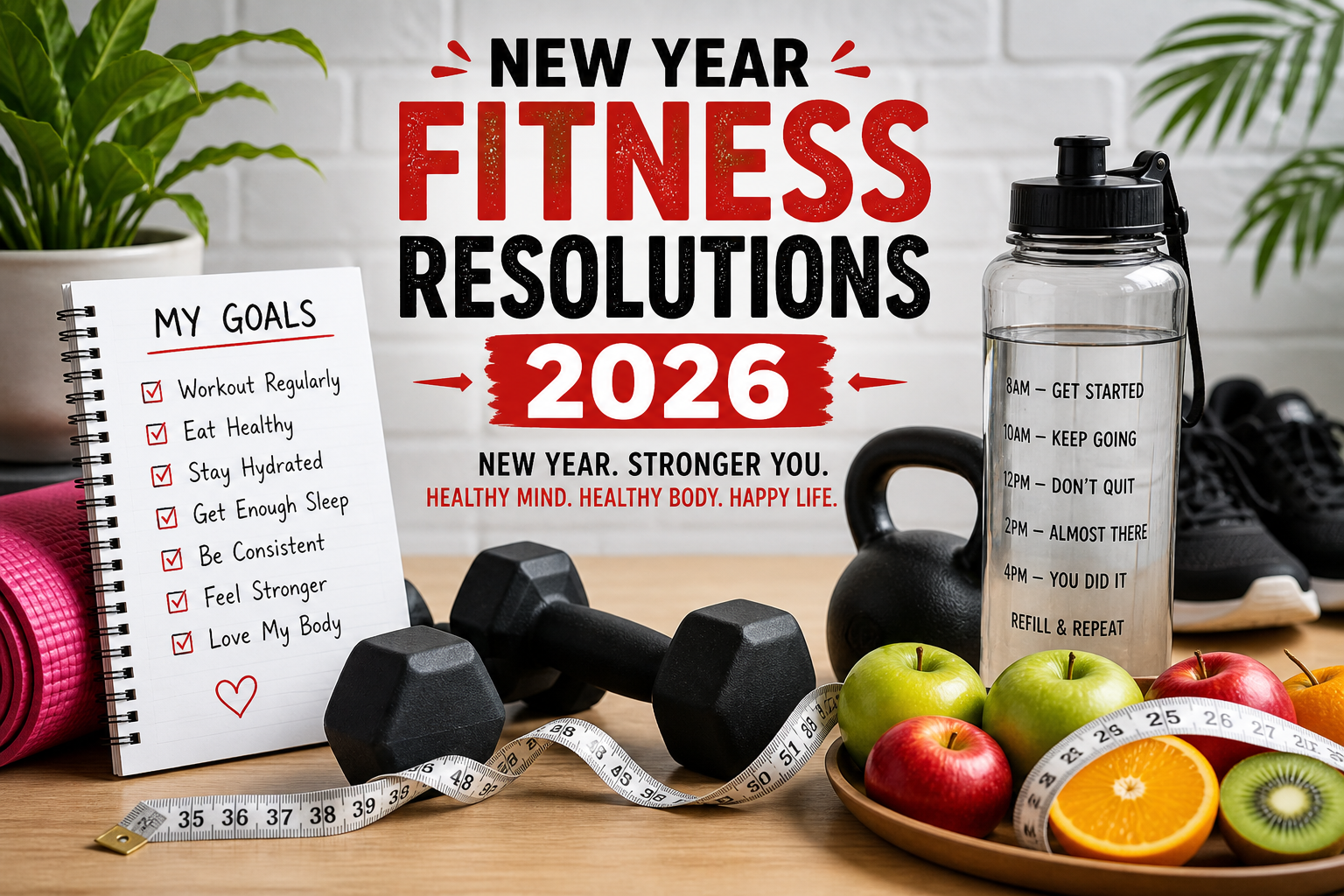
🔥 Achievable Fitness Resolutions for 2026
- 🚶 Walk 8,000–10,000 steps daily — simple and sustainable.
- 🏋️ Strength train 3 days/week — improves metabolism.
- ⏱️ 20-minute daily workouts — consistency over intensity.
- 💧 Drink 2–3 liters of water — supports recovery.
- 😴 Sleep 7–8 hours — essential for fitness success.
- 🥗 Eat balanced meals — focus on whole foods.
- 🏃 Run a 5K — achievable yearly goal.
🌟 Long-Term Health Goals
- 💪 Build strength gradually
- 🫀 Improve heart health
- 🧘 Increase flexibility
- 🚴 Try new activities
❌ Why Fitness Resolutions Fail
- Too ambitious goals
- No clear plan
- Lack of consistency
🎯 How to Stay Consistent
- Set small weekly goals
- Track your progress
- Follow a fixed routine
- Reward yourself
✅ Final Thoughts
The best fitness resolution is the one you can maintain. Focus on consistency, not perfection, and you’ll see real results in 2026.
❓ FAQs
What is the best fitness resolution?
One that is simple, consistent, and fits your lifestyle.
How long does it take to build a habit?
Typically 21–66 days depending on consistency.
The Real Reason Fitness Resolutions Don't Stick
The problem isn't motivation — it's structure. Most fitness resolutions start strong because January brings genuine enthusiasm and social reinforcement. Everyone around you is also starting something. The gym is crowded. Your friends are posting about their runs. The momentum carries you for a few weeks.
By mid-February, the social reinforcement fades. Life fills in. The specific time you'd set aside for exercise gets reclaimed by work, family, and tiredness. What you're left with is a vague intention and a mounting sense of guilt about not following through. That guilt, ironically, makes it harder to start again — because starting again means confronting how long you stopped.
Start With a Habit, Not a Goal
Fitness goals — run a 5K, lose 15 pounds, bench press your bodyweight — give you something to aim for. But goals don't tell you what to do on a Tuesday afternoon when you're tired and it's raining outside. Habits do. A habit is an action linked to a trigger, and the trigger makes the decision for you.
"Exercise three times per week" is a goal. "Walk for 20 minutes immediately after dinner" is a habit. The walk after dinner happens because dinner happened, not because you decided that Tuesday was a good day to exercise. The best fitness resolutions are actually habit designs in disguise: they specify the time, the place, the trigger, and the minimum viable action — something small enough that saying "I don't feel like it" can't reasonably apply.
The Minimum Viable Workout
One reason people skip workouts is that they've mentally committed to a 45-minute session, and when 45 minutes isn't available, they do nothing instead. The fix is to define a minimum viable workout — the shortest version of your routine that still counts. For most people this is something like 10 minutes of movement: a short walk, a handful of exercises, a brief yoga flow.
The minimum viable workout serves two purposes. First, on days when you're genuinely stretched for time or energy, you do it and maintain the habit. Second, once you've started the minimum, you often continue past it — getting started is the hard part, not continuing once you're in motion. On the days when you don't go past the minimum, that's fine. You still kept the streak.
What "Consistency Over Intensity" Actually Means
You'll hear this advice often: consistency beats intensity. It's true but incomplete. What it really means is that showing up imperfectly and regularly will produce better results over a year than showing up perfectly for six weeks and then burning out. A 20-minute walk three times a week for 52 weeks produces more total movement and better habits than a 5-day-a-week intense gym program that you abandon in April.
Intensity has its place — it builds specific fitness qualities and can be more efficient if you're time-constrained. But it's the enemy of the resolution phase, where the goal is to establish the pattern, not to hit peak performance. Keep the first month deliberately under your capacity. You should finish each session feeling like you could have done more. The time to push intensity is month three, not week one.
Tracking That Doesn't Become Its Own Burden
Fitness tracking apps can be genuinely motivating — or they can become another chore you abandon alongside the workout itself. The simplest tracking system is a paper calendar with an X on each day you did something. That's it. At the end of the month, you can see the pattern of Xs and identify where you tend to skip. You don't need a heart rate graph or a step count breakdown to keep a fitness resolution — you just need to know whether you did the thing or not.
⬅ Back to Blogs 🎯 Generate Your Fitness ResolutionThis guide is based on practical habit-building strategies and real fitness planning methods.
Share this wheel:
I just used this fun wheel on thewheelofname.com 🎡 Try it!.