🌈 Benefits of Multi-Sensory Learning for Preschoolers
By The Wheel of Name Team ·
By Kids Learning Games Team • Published March 2026
Multi-sensory learning is one of the most powerful ways for preschoolers to understand and remember new concepts. When children use their eyes, ears, hands, and movement together, their brains make stronger connections — helping them learn faster and enjoy the process.
Here’s why multi-sensory learning is highly recommended for early childhood education.
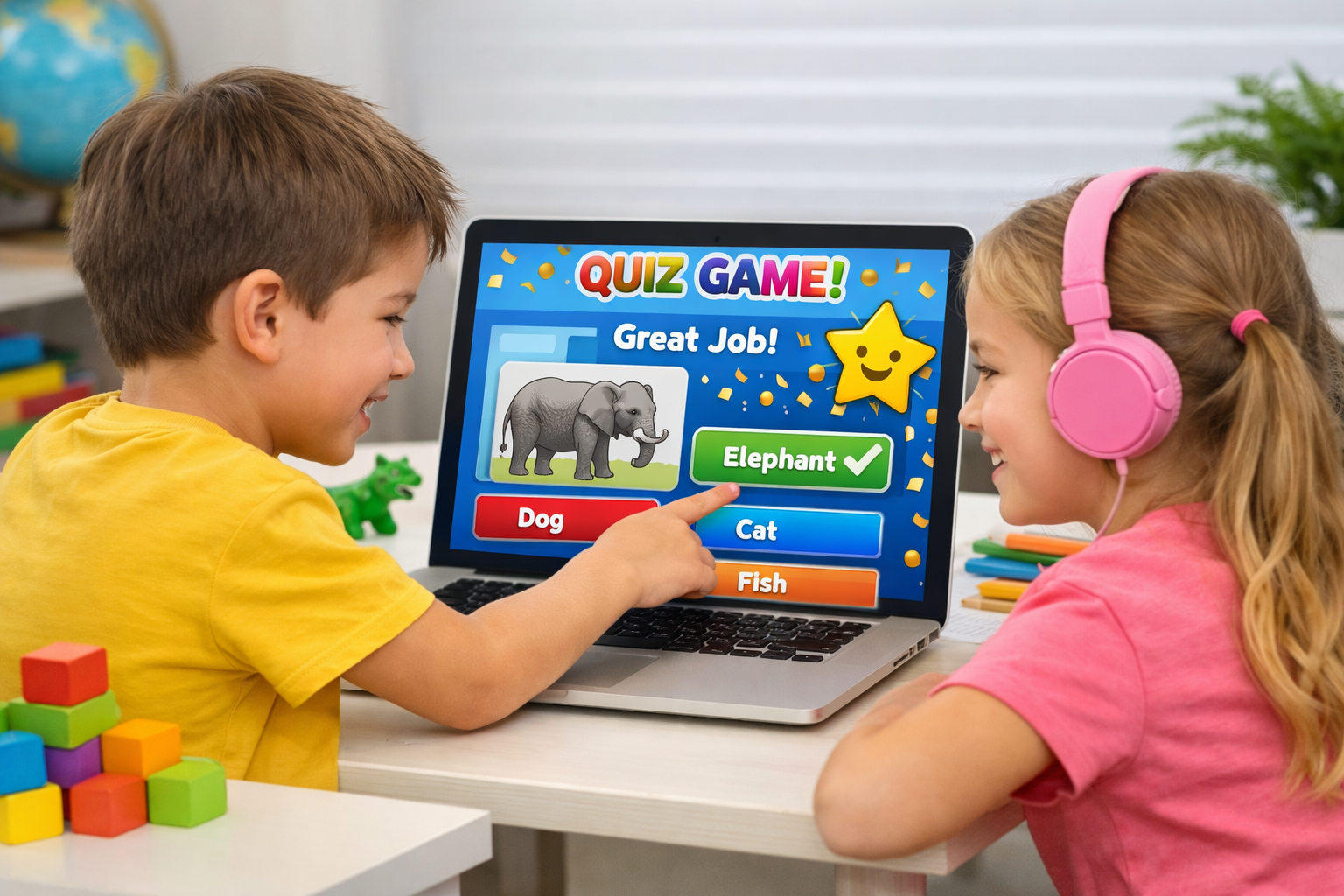
🎮 Try Our Kids Learning Games
Why Multi-Sensory Learning Works
- 🧠 Improves memory retention: Kids remember better when they see, hear, and interact with learning material.
- 🎯 Keeps children focused: Engaging multiple senses reduces boredom and boosts attention span.
- 👶 Fits all learning styles: Visual, auditory, and kinesthetic learners all benefit.
- 🧩 Strengthens brain development: Multi-sensory activities stimulate multiple neural pathways.
- 🗣️ Improves vocabulary: Image + Sound + repetition helps kids learn new words faster.
Examples of Multi-Sensory Learning Activities
- 🎵 Image + Sound Games: Kids see an object and hear its name — perfect for vocabulary building.
- 🤲 Touch-and-Feel Flashcards: Shapes, textures, and objects improve tactile learning.
- 🚶 Move & Learn Activities: Jump when you hear an animal sound, clap for color names, etc.
- 🎨 Creative sensory art: Color mixing, sand play, finger painting.
- 🔍 Identify & Match Activities: Match images with sounds or actions.
How Our Tool Supports Multi-Sensory Learning
- 🖼️ Visual learning: Colorful images for object recognition.
- 🔊 Auditory learning: Real sound effects and spoken names.
- 🧪 Interactive quizzes: Kids answer questions using visual and audio cues.
- 📤 Parent upload feature: Create custom learning sets with your own images and languages.
How Parents Can Use Multi-Sensory Learning at Home
Parents can easily apply multi-sensory learning techniques at home using simple activities. Combining images, sounds, and hands-on interaction helps children learn naturally through play.
- Use picture cards with spoken words.
- Play sound identification games with animals or objects.
- Ask kids to point to objects while hearing their names.
- Use movement activities like clapping or jumping for answers.
Frequently Asked Questions
What is multi-sensory learning?
Multi-sensory learning is a teaching method where children learn using multiple senses like sight, sound, touch, and movement at the same time.
Why is multi-sensory learning important for preschoolers?
It helps strengthen brain connections, improves memory retention, and keeps young children engaged in the learning process.
When Screens Are the Right Tool for Young Learners
The research on screen time for preschoolers is more nuanced than the headline version suggests. Passive consumption — watching videos without interaction — produces limited educational benefit for young children. Interactive digital tools that require the child to respond, match, identify, or choose produce measurably better retention, particularly when the content reinforces concepts also taught in physical contexts.
An image-based learning game that asks a child to name what they see, match images to words, or identify categories engages the same cognitive processes as physical flashcards, with the addition of immediate feedback and adaptive difficulty. Used alongside physical play and conversation rather than as a replacement for them, these tools fit well within a multi-sensory learning environment.
Repetition With Variation
Preschoolers need repetition to consolidate vocabulary — hearing and seeing the same word many times in slightly different contexts is how language sticks. The advantage of a digital image game over fixed flashcards is that it can vary the presentation: the same word appears with different images, in different orders, or paired with different peer words. This variation within repetition is more effective for long-term retention than identical repetitions, and it prevents the "I've seen this one" recognition that can bypass actual recall.
🏠 Go to Kids Learning HomeShare this wheel:
I just used this fun wheel on thewheelofname.com 🎡 Try it!.