📚 Why Interactive Image-Name Games Help Kids Learn Faster Than Flashcards
By The Wheel of Name Team ·
Traditional flashcards have been used for decades to teach kids vocabulary. But today, interactive image-name games with sounds, animations, and quizzes are proving to be far more effective.
These modern tools are not just fun—they engage multiple parts of the brain, helping children learn, remember, and use new words much faster.
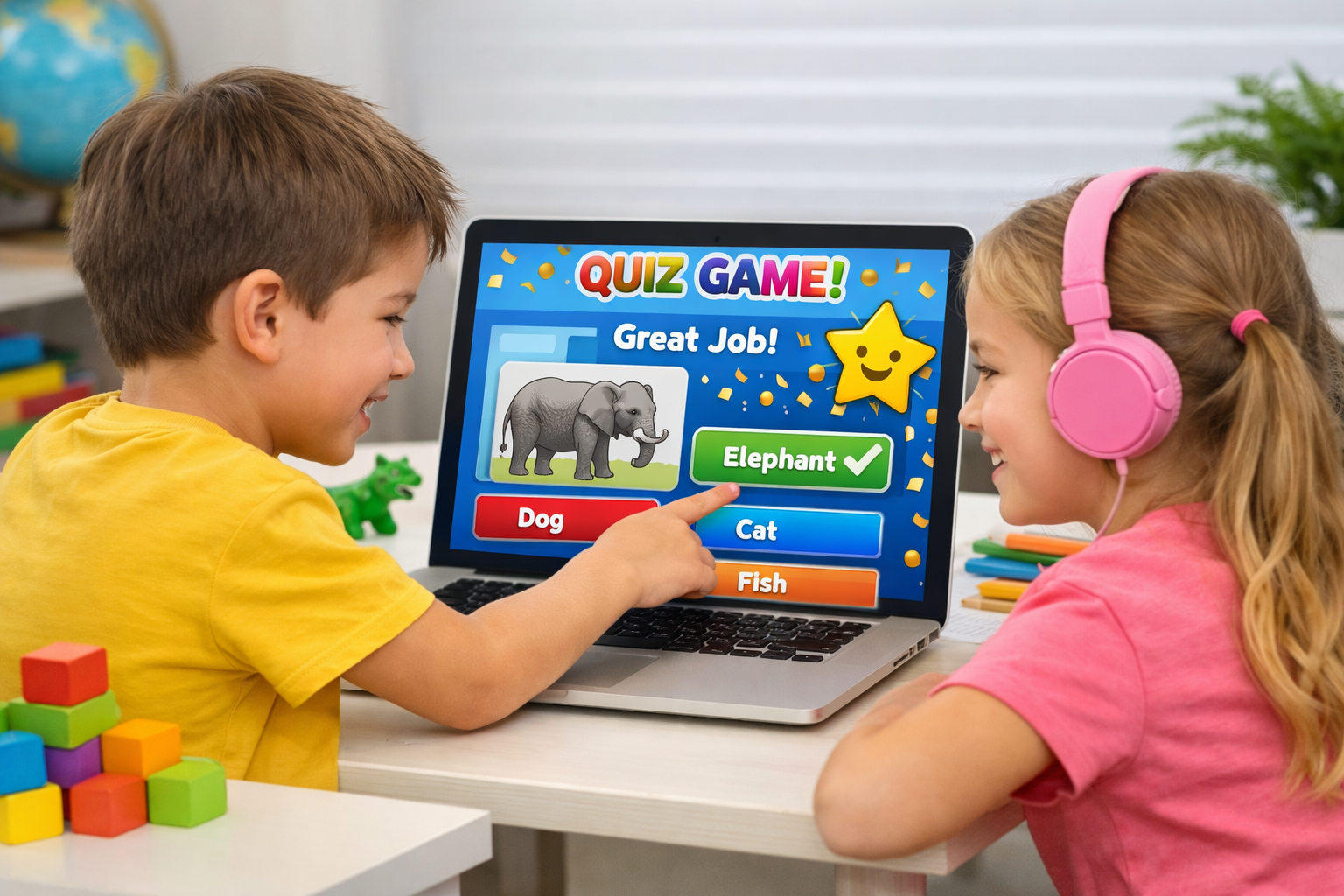
🎮 Try Our Kids Learning Games
1. Kids Learn Better When Multiple Senses Are Involved
Flashcards show only text and an image. But interactive games add:
- 👀 Visuals
- 👂 Sounds
- 🖱️ Interaction (click, slide, drag)
- 🎉 Rewards like confetti and animations
This multi-sensory learning dramatically improves memory and understanding.
2. Kids Stay Focused Longer
Flashcards are passive and repetitive, so kids get bored quickly. But interactive games provide:
- New images every time
- Fun sounds
- Quizzes and challenges
- Instant feedback
This keeps kids excited and focused for longer learning sessions.
3. Games Create a Stronger Memory Connection
When kids see an image, hear a sound, click a button, and get a reward— the brain builds stronger neural pathways.
That means kids can recall words faster and use them correctly in real life.
4. Children Feel Motivated When Learning Feels Like Play
Kids love games. So when learning looks like fun:
- They show more interest
- They learn without pressure
- They enjoy repeating activities
Repetition + Enjoyment = Faster Learning ✔️
5. Interactive Quizzes Improve Confidence
When kids guess the name of an image and see correct/wrong instant feedback, they build:
- Better decision-making
- Improved vocabulary recall
- Higher self-confidence
- Active learning habits
6. Parents Can Track Progress Easily
Modern image-name learning tools include:
- History of answers
- Scoreboards
- Categories like animals, fruits, vehicles, colors
This helps parents know what the child is improving in—and where they need help.
Related Learning Articles
- How to Teach Kids Vocabulary With Images
- Why Interactive Image Games Help Kids Learn Faster
- Fruits, Animals & Colors Quiz for Kids
❓ Frequently Asked Questions
Are flashcards still useful for kids?
Flashcards can still help with basic memorization, but interactive learning games are often more engaging because they combine images, sound, and interaction.
Why do kids learn faster with games?
Games activate multiple senses and provide instant feedback, which helps the brain build stronger memory connections.
What age group benefits from image-name games?
These games work best for children between ages 3 and 7, when visual and interactive learning is most effective.
When Should Parents Use Interactive Learning Games?
Interactive learning games work best during short daily learning sessions. Experts recommend using them for 3 to 6 minutes at a time so children stay focused and motivated.
Parents can combine image-name games with reading, storytelling, and outdoor activities to create a balanced learning routine.
Interactive image-name games are engaging, effective, and scientifically proven to help kids learn vocabulary faster than old-style flashcards. When kids learn through fun, they learn for life.
Share this wheel:
I just used this fun wheel on thewheelofname.com 🎡 Try it!.