🎉 How to Generate Random Names for Classrooms, Events & Giveaways
By The Wheel of Name Team ·
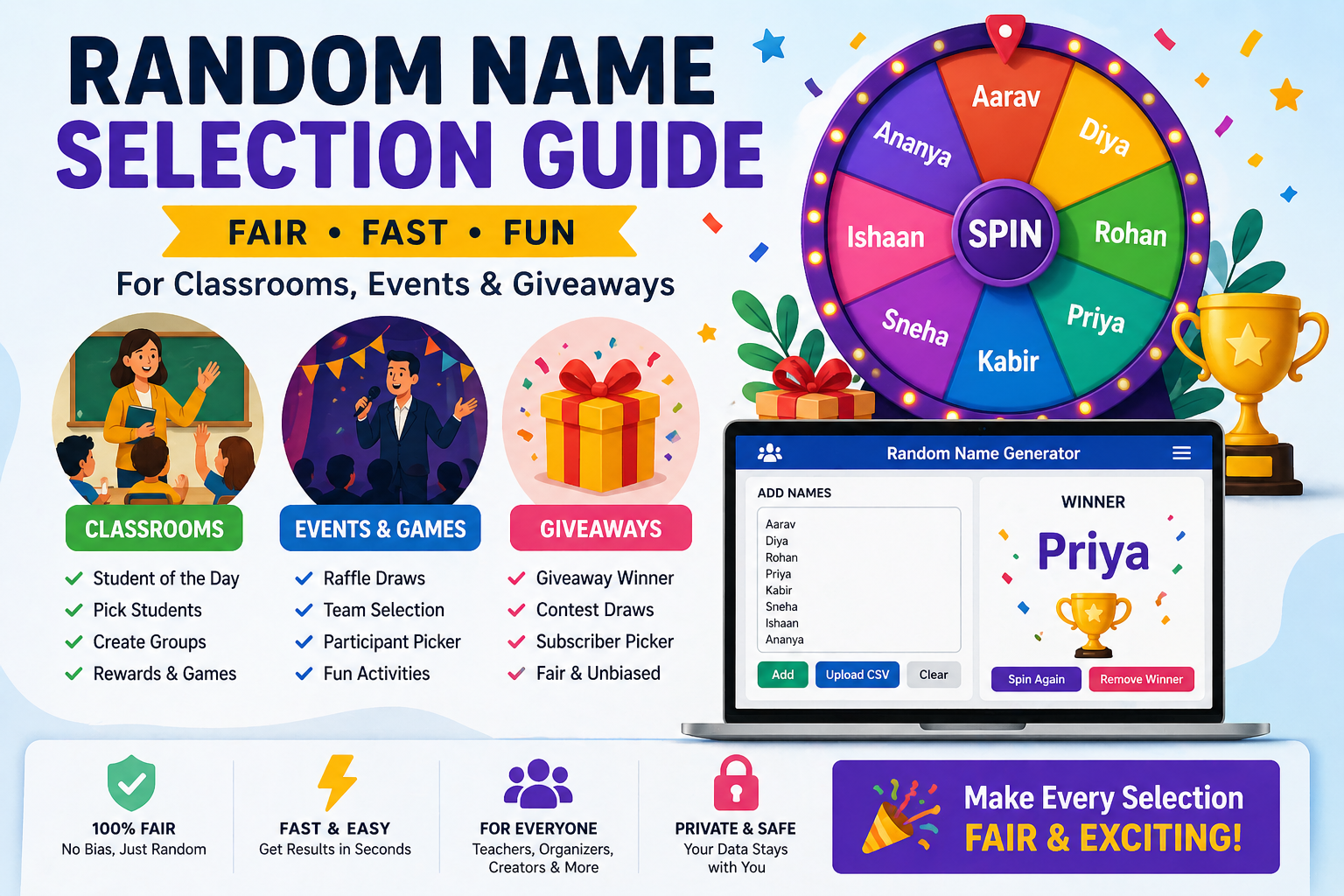
Selecting names randomly is essential when fairness matters — whether in classrooms, events, or online giveaways. A proper Random Name Generator ensures everyone has an equal chance while saving time and effort.
🎯 Why Random Name Selection is Important
- ✔ Ensures complete fairness and transparency
- ✔ Eliminates bias and manual selection errors
- ✔ Saves time for large groups
- ✔ Makes activities fun and engaging
🧑🏫 How to Generate Names (Step-by-Step)
- 1️⃣ Enter names manually OR upload CSV list
- 2️⃣ Choose filters (optional)
- 3️⃣ Click “Generate Names”
- 4️⃣ Copy or send names to the wheel
- 5️⃣ Spin to select a random winner
🏫 Classroom Use Cases
Teachers can use random name generators for:
- Student of the Day selection
- Picking students for answering questions
- Creating random groups for projects
- Reward distribution
🎪 Events & Games
- Lucky draw selection
- Game participant picker
- Team selection for competitions
- Party raffle draws
🎁 Giveaways & Contests
- Instagram or YouTube giveaways
- Random subscriber selection
- Contest winner announcement
- Fair prize distribution
⚡ Pro Tips for Better Results
- ✔ Remove duplicate names before generating
- ✔ Use CSV upload for large lists
- ✔ Keep name formatting consistent
- ✔ Use spin wheel for visual selection
🚀 Best Tool for Random Name Generation
Instead of manual methods like paper chits, use a digital tool for faster and more accurate results. You can generate up to hundreds of names instantly.
❓ Frequently Asked Questions
Is random name selection fair?
Yes, digital generators use algorithms to ensure unbiased and equal probability.
Can I upload names from a file?
Yes, you can upload CSV or text files and generate names instantly.
Can I use this for giveaways?
Absolutely. It’s perfect for selecting winners in contests and raffles.
Is it free to use?
Yes, the tool is completely free with no signup required.
Why Random Name Generation Beats Manual Picking
The most common alternative to a name generator in classroom and event settings is the teacher or organizer picking names themselves. This seems simpler but creates a practical problem: the person doing the picking is never truly random. Humans have unconscious biases — we return to familiar names, overlook quieter students, and create patterns without realizing it. Over time, the same people get called on, selected for activities, or left out of giveaways.
A random name generator removes that bias entirely. Every name in the pool has an exactly equal chance of being selected. There's no subconscious preference and no pattern to exploit. Students and participants trust the result more when they can see the randomization happen transparently — and that trust changes how people feel about the outcome.
In the Classroom: More Than Just Calling on Students
Teachers who use random name generators quickly find uses beyond the obvious. Group assignment by random name draw prevents the social clustering that happens when students self-select. Random reading order in class discussions keeps everyone on their toes. Random selection for classroom jobs — line leader, board eraser, supply manager — eliminates the weekly argument about whose turn it is.
For larger projects, random name generation can be used to assign research topics, select presentation partners, or determine the order of feedback in peer review sessions. The fairness is visible and inarguable, which tends to reduce the low-level social friction that comes from any arrangement where students suspect favoritism or unfairness.
For Events: Drawing Winners Without Drama
Event giveaways and prize draws have a credibility problem when the organizer manually selects winners. Even when the selection is genuinely random, people wonder. A visible tool that generates a name from the full list in real time — on a projected screen, streamed live, or shown in a video — addresses the perception problem directly.
For social media giveaways, copying comment names into the generator and rolling on camera is now a standard approach for creators who want their audiences to trust the process. It takes under two minutes, the result is clear, and the transparency builds goodwill that outweighs any extra effort.
How to Set Up a Name Generator Draw for Your Situation
The basic setup is the same regardless of context: collect your list of names, enter them into the generator, and spin. For classroom use, a class roster that you paste in once and reuse throughout the term saves time. For event giveaways, export participant names from your registration system, clean duplicates, and paste the final list. For social media draws, copy commenter names manually or use a tool that exports them automatically.
One thing worth doing before any public draw: test the generator with your list beforehand to confirm everything loaded correctly. Running a live draw and having a name appear twice — or having the generator display an error — undermines the credibility you were trying to build. A 60-second dry run before going live prevents most of these issues.
⬅ Back to BlogsShare this wheel:
I just used this fun wheel on thewheelofname.com 🎡 Try it!.