🔠 Random Letters for Kids Learning – A to Z Activities
By The Wheel of Name Team ·
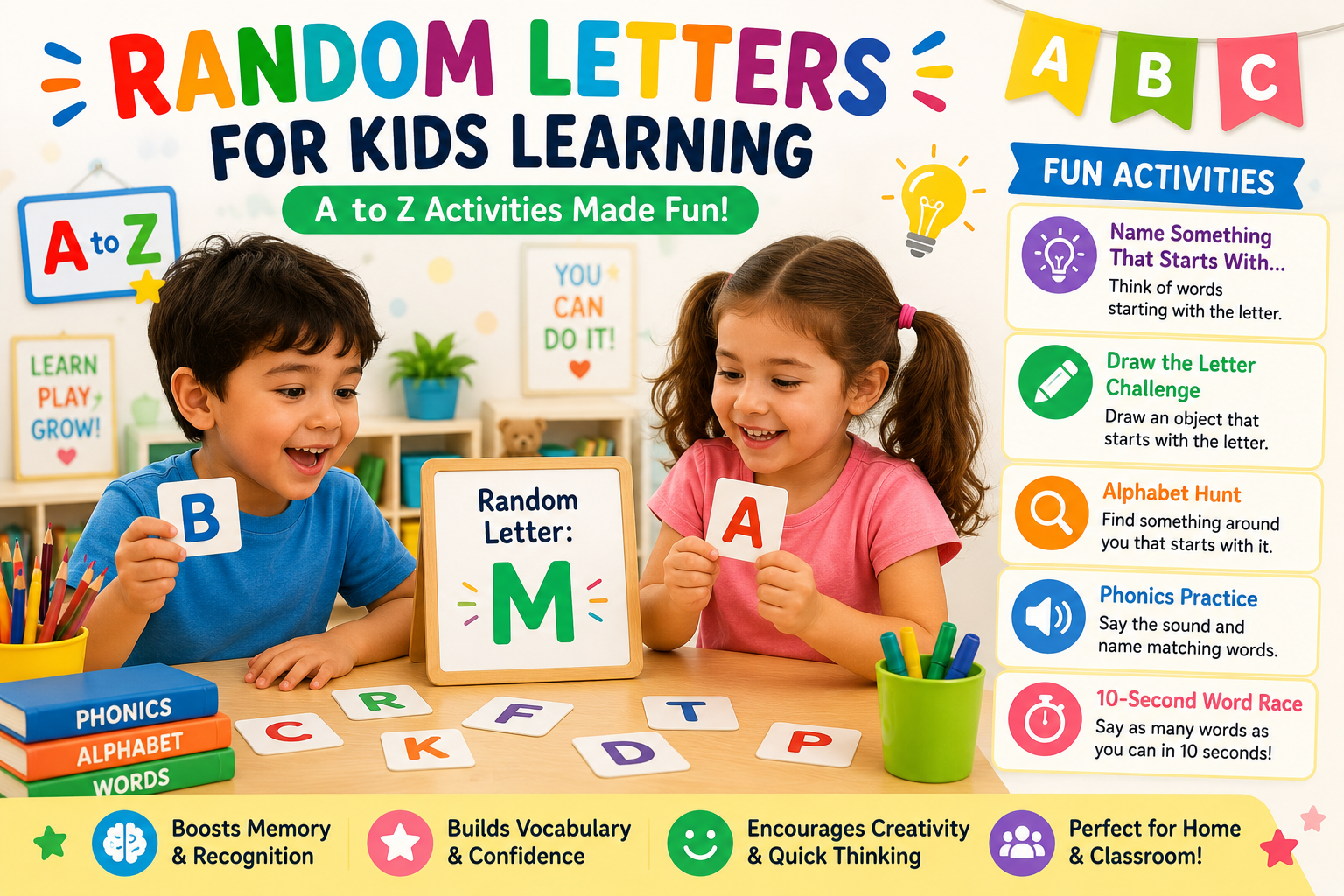
Teaching kids the alphabet becomes more fun and interactive with a Random Letter Generator. It helps children practice letter recognition, phonics, vocabulary, and creative thinking using simple A–Z activities. Whether you're a parent, teacher, or homeschooler, these activities make learning playful and engaging.
🎓 Why Use Random Letters for Kids Learning?
Random letters encourage quick thinking and improve kids’ ability to recall words, sounds, and letter shapes. It transforms traditional A–Z learning into exciting challenges and games.
- Boosts alphabet recognition
- Improves phonics and sound awareness
- Helps build vocabulary
- Makes learning active and fun
- Great for classrooms and home practice
🎉 More Fun Learning Ideas
- Animal Alphabet: Name animals starting with the generated letter.
- Food Challenge: Kids say foods beginning with the random letter.
- Color Match: Match the letter with objects of a specific color.
- Speed Quiz: Kids answer quickly before the timer ends.
🧩 A to Z Activities Kids Love
1. 🎯 Name Something That Starts With…
Generate a letter → kids must quickly name an object, animal, or food starting with that letter.
2. 🎨 Draw the Letter Challenge
Kids draw an object beginning with the random letter. Great for creativity and vocabulary.
3. 📚 Alphabet Hunt
Generate a letter → kids find something in the classroom or home starting with that letter.
4. 🗣 Phonics Sound Practice
Kids say the letter sound and list words that match. Good for early readers.
5. ⏱ 10-Second Word Race
Start a timer → kids must say as many words as possible beginning with the letter.
🏫 Perfect for Teachers & Classroom Activities
- Warm-up activities before lessons
- Phonics practice for early learners
- Group games for vocabulary building
- Silent activities like drawing or writing
🌟 Benefits of A–Z Learning with Random Letters
- Builds confidence in early learners
- Encourages fast thinking
- Supports spelling and reading skills
- Makes alphabet learning exciting
📚 Related Articles
❓ Frequently Asked Questions
How do random letters help kids learn?
Random letters improve alphabet recognition, phonics skills, vocabulary building, and quick thinking through interactive activities.
Are random letter games good for preschoolers?
Yes. Preschoolers can practice letter sounds, object recognition, and early reading skills using fun alphabet games.
Can teachers use random letter generators in classrooms?
Yes. Teachers use random letter generators for phonics exercises, word games, classroom warm-ups, and vocabulary activities.
What are the benefits of A to Z activities for kids?
A to Z activities support reading readiness, memory improvement, spelling, and creative learning.
Share this wheel:
I just used this fun wheel on thewheelofname.com 🎡 Try it!.