🎓 8 Classroom Activities Using a Lucky Winner Picker
By The Wheel of Name Team ·
By Lucky Winner Picker Team • Updated May 2026
Managing classroom participation fairly while keeping students engaged is one of the biggest challenges teachers face today. A Lucky Winner Picker introduces randomness to ensure equal opportunity and better engagement.
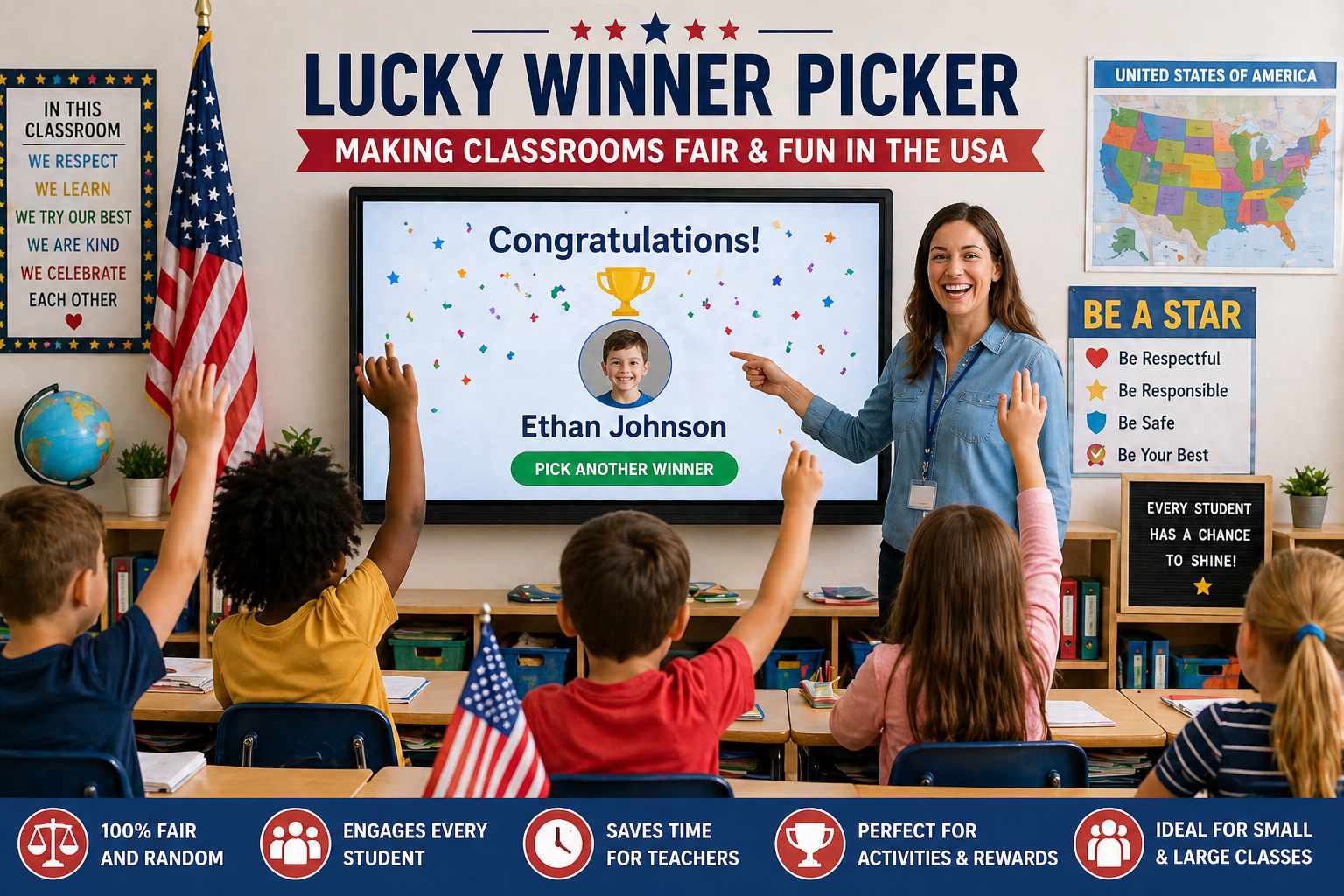
🛠️ How Teachers Can Use a Lucky Winner Picker
- Add all student names
- Use daily for participation
- Display results for transparency
- Rotate selections
📚 8 High-Impact Classroom Activities
1. Assign Daily Responsibilities
Fairly assign classroom roles.
2. Random Question Answering
Keeps all students alert.
3. Oral Quiz Rounds
Improves participation.
4. Homework Presentation
Encourages preparation.
5. Reward-Based Participation
Select winners fairly.
6. Group Creation
Create balanced teams instantly.
7. Role Play
Random roles increase engagement.
8. Classroom Games
Make learning fun.
🆚 Random Picker vs Traditional Selection
- Traditional: Same students participate
- Picker: Equal opportunity
- Traditional: Bias risk
- Picker: Transparent
📊 When Should Teachers Use It?
- Revision sessions
- Classroom games
- Assigning roles
- Online classes
⚠️ Common Mistakes to Avoid
- Duplicate names
- Overuse
- No explanation
- No tracking
✅ Final Thoughts
A Lucky Winner Picker ensures fairness, boosts engagement, and improves classroom management.
❓ Frequently Asked Questions
Is it effective?
Yes, it increases participation.
Can it help shy students?
Yes, it removes pressure.
Works online?
Yes, perfect for virtual classes.
Building a Classroom Culture Around Fair Randomness
One of the quieter benefits of using a winner-picker tool regularly in a classroom is what it teaches students about fairness. When selection is visibly random and the mechanism is the same every time, students stop interpreting "who got picked" as a statement about teacher favouritism or their own social standing. The wheel has no memory and no bias — it just lands somewhere. Over time this builds a classroom culture where being called on, being assigned a role, or being selected for an activity feels fair rather than political.
This matters more than it might seem. Research on classroom participation consistently shows that students disengage when they believe the selection process is biased, even if it isn't. A visible random mechanism removes that perception entirely, which raises overall participation levels and reduces the social anxiety around who gets picked for what.
⬅ Back to Blogs 🎯 Try Lucky Winner PickerThis guide is based on real classroom teaching practices and practical usage of random selection tools.
Share this wheel:
I just used this fun wheel on thewheelofname.com 🎡 Try it!.